
P.08Individuals & enthusiasts
Reverse engineering: reproducing a part in 3D
Reproducing an existing part in 3D: measurement and scanning to obtain a clean, editable CAD model ready to remake, by machining or 3D printing.
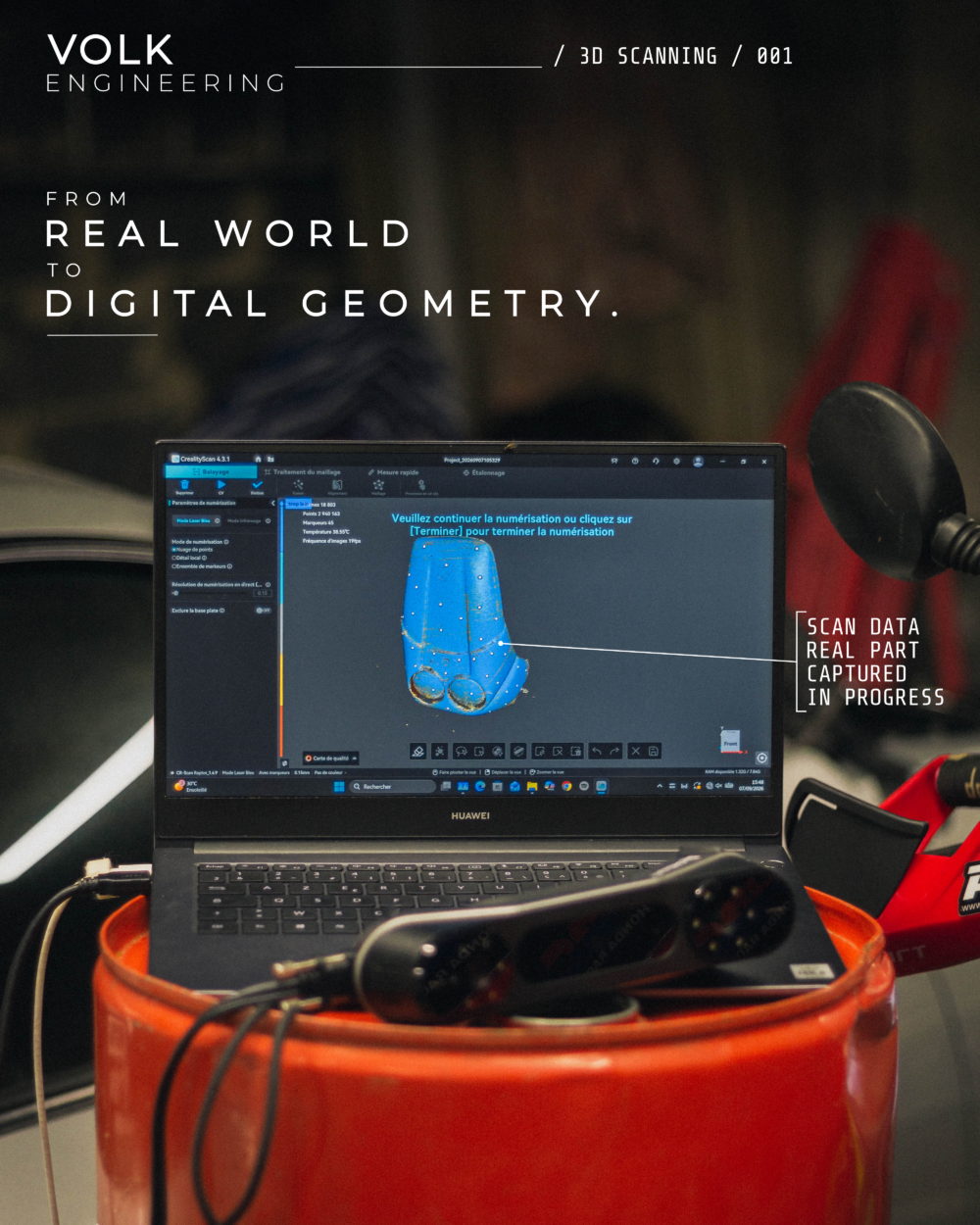
What is reverse engineering?
Reverse engineering (rétroconception or rétro-ingénierie in French) starts from a physical object to rebuild its digital definition. It is the solution when a part has no drawings, or when you want to copy it, modify it or remake several copies.
Scanning a part isn't enough
A 3D scan is an imprint: it also reproduces wear, distortion and measurement noise. Printing a scan directly rarely gives a part that fits well. The scan serves as a reference to rebuild a true CAD model with the right dimensions.
A clean model, not a copy of the scan
The part is remodelled with controlled solids: fitting dimensions recovered, bores and fits restored to the right values, wear compensated. The model is editable: you can reinforce an area, change a fixing or adapt the part to another use.
Reproducing a part in 3D, step by step
- Survey — measurements, dimensioned photos or 3D scan.
- Reconstruction — parametric CAD model, design intent recovered.
- Verification — comparison with the scan or the part, check of fitting dimensions.
- Files — STEP for machining, STL for 3D printing, dimensioned drawings.
If the goal is to get the finished part back, see unavailable spare part. For a company that needs parts surveyed on its premises, see on-site industrial reverse engineering.
Frequently asked questions
Is a 3D scanner always needed?
No. Many parts can be measured perfectly well with conventional instruments. 3D scanning is used when the shape calls for it.
What's the difference between rétroconception and rétro-ingénierie?
None in practice: both French terms, like reverse engineering, mean rebuilding a model from an existing part.
Can I 3D-print the part myself?
Yes: you receive the STL file, with advice on material and orientation if the part carries loads.
Which file formats do you provide?
STEP and IGES for 3D models, STL for 3D printing, PDF and DXF for drawings.
02Process
From need to deliverable, step by step.
Every step is shared with you. You know what is being done, why, and what comes next.
-
01
Part
Existing, worn or broken.
-
02
Measurement
Calipers, 3D scan.
-
03
Model
Clean parametric CAD.
-
04
Drawings
Dimensions, tolerances, formats.
03Price guide
How much does a part cost?
It all depends on the part: its size, material, process and quantity.
After a first exchange and a look at your photos.
VAT not applicable, art. 293 B of the French General Tax Code.
04Other services
Another need? It all comes from the same expertise.
-
 P.04
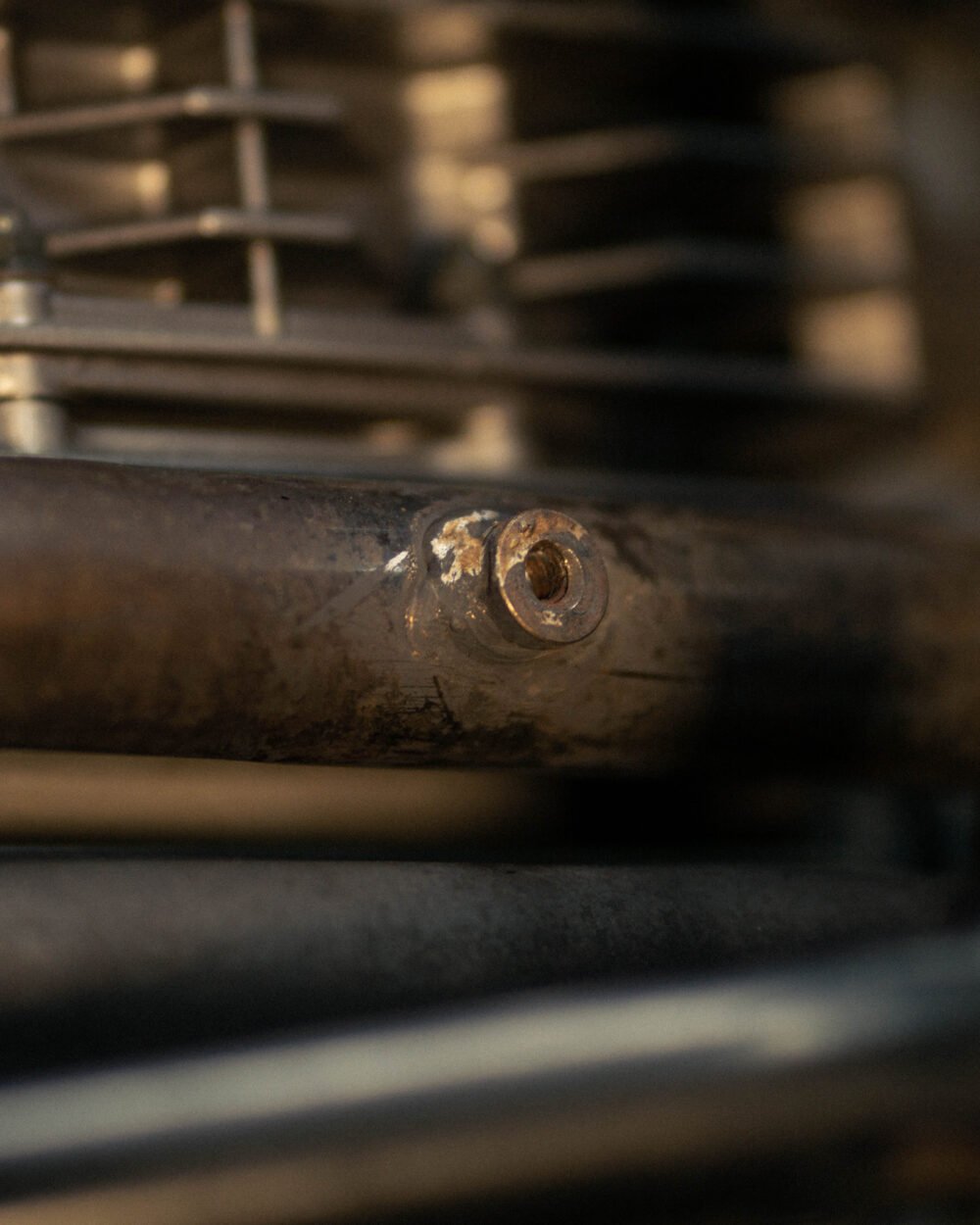
Unavailable spare part: custom remanufacturing
Discontinued, broken or overpriced: the part is measured, redrawn and remade.
View service -
P.05
Parts for classic cars & vintage motorcycles
Parts no longer made for classic cars, youngtimers and vintage motorcycles: surveyed, redrawn, remanufactured.
View service -
P.06
Custom boat parts: fittings, brackets & deck hardware
Broken fitting, unavailable bracket, fit-out to create: parts designed to last in a marine environment.
View service -
 Shop
Shop
Parts already designed, available to order.
Visit the shop
05Contact
Let's talk about your part.
Describe your part and attach photos, dimensions or files.
- Reply within 48 hbusiness days
- Free quoteno obligation
- Privacynon-disclosure agreement on request
- A single point of contactfrom the first exchange to delivery
- Phone06 40 35 39 43
- Emailvolkengineeringfr@gmail.com
- AreaBased in Montpellier · Occitanie · remotely anywhere in France
5/5 on Google · 2 reviews
After you send it
- I read your requestand your files, within 48 business hours.
- I get back to youby phone or e-mail, with my questions.
- You receive a quotefree and with no obligation.